
Blog
Understanding Tribupneu: Unveiling Its Impact and Significance


Introduction
In today’s ever-evolving landscape, understanding emerging concepts is critical for staying ahead. One such concept is Tribupneu, a term that has gained attention across various industries. Whether you’re an enthusiast, a professional, or simply curious, this article delves into the multifaceted nature of Tribupneu. From its origins to its current applications, we will explore how this concept affects different sectors and its potential for future growth.
Tribupneu has relevance in fields ranging from technology to healthcare, making it essential to understand its true meaning and impact. As we dissect its components, we will provide clarity on why Tribupneu is more than just a passing trend. We aim to equip you with valuable insights that highlight its significance and applications.
What is Tribupneu?
Tribupneu refers to a complex and interdisciplinary concept that combines various elements from multiple fields. It originated as a theoretical framework designed to address challenges in modern industries, particularly in technology and healthcare. At its core, Tribupneu explores the intersection of efficiency, innovation, and adaptability within these sectors.
The term has evolved beyond its original scope, finding applications in sectors such as manufacturing, logistics, and even environmental sustainability. Its growing significance is attributed to its ability to provide solutions to persistent problems like resource management, automation, and system integration.
Will You Check This Article: Kracensoft.com: Revolutionizing Software Solutions for Modern Businesses
The Evolution and Origins of Tribupneu
To fully understand Tribupneu, it’s essential to trace its roots. The concept emerged in the early 2000s, with initial research focusing on its theoretical applications within the technology sector. Over time, Tribupneu expanded to address challenges in industries where innovation and resource management were critical.
One of the pivotal factors that propelled Tribupneu into the spotlight was its integration into the healthcare sector. The need for more efficient medical technologies and streamlined processes became evident, and Tribupneu provided a viable framework to meet these demands. Through its interdisciplinary approach, Tribupneu became a key player in addressing complex problems across various industries.
Key Components of Tribupneu
Tribupneu can be broken down into several core components, each of which plays a crucial role in its functionality and application. These components are designed to work together to optimize processes and foster innovation. Some of the key elements include:
- Automation: Central to Tribupneu’s effectiveness is its ability to automate complex tasks, reducing the need for human intervention while improving accuracy and speed.
- Adaptability: Tribupneu’s framework is highly adaptable, making it suitable for a wide range of industries, from healthcare to manufacturing.
- Resource Management: Efficient resource allocation is a key aspect of Tribupneu, ensuring that both time and materials are used in the most effective way possible.
- Integration: The ability to seamlessly integrate with existing systems and technologies is another vital component of Tribupneu, enabling smoother transitions and greater operational efficiency.
Applications of Tribupneu Across Industries
1. Healthcare
In the healthcare sector, Tribupneu has been instrumental in transforming patient care and hospital management. Its automation capabilities streamline administrative tasks, allowing medical professionals to focus more on patient care. Additionally, its adaptability ensures that Tribupneu can be integrated into various healthcare systems, optimizing resource allocation in hospitals and clinics.
Tribupneu has also contributed to advancements in medical technology, such as the development of smarter diagnostic tools and patient monitoring systems. These innovations not only improve patient outcomes but also make healthcare delivery more efficient and cost-effective.
2. Manufacturing and Logistics
Tribupneu’s impact extends to manufacturing and logistics, where its resource management capabilities are particularly valuable. By optimizing supply chains and automating processes, Tribupneu helps companies reduce costs and improve production timelines. Its adaptability allows businesses to scale operations without sacrificing quality or efficiency.
In the logistics industry, Tribupneu enhances tracking and distribution, ensuring that goods are delivered on time and with minimal waste. Its ability to integrate with existing logistics platforms makes it an appealing option for companies looking to upgrade their operations without overhauling their entire system.
3. Environmental Sustainability
Tribupneu’s role in environmental sustainability is becoming increasingly important as industries look for ways to reduce their carbon footprint. Through its resource management capabilities, Tribupneu enables businesses to optimize energy consumption and reduce waste. Whether in manufacturing or logistics, Tribupneu helps companies implement greener practices that are both cost-effective and environmentally responsible.
4. Technology and AI
Tribupneu has significant applications in the world of technology and artificial intelligence (AI). Its ability to automate tasks and integrate with existing systems makes it a valuable tool for AI development. Tribupneu plays a key role in optimizing AI models, improving data processing, and increasing the overall efficiency of technology systems.
Tribupneu’s Future and Potential
The future of Tribupneu looks promising, with its applications expected to expand across more industries. As businesses continue to seek more efficient and adaptable solutions, Tribupneu’s ability to streamline operations and reduce costs will make it a vital tool in the coming years.
Moreover, with ongoing advancements in technology and AI, Tribupneu is likely to become even more sophisticated, providing businesses with smarter solutions for the challenges they face. The potential for Tribupneu to impact industries globally is immense, and its continued evolution will only increase its significance.
Conclusion
Tribupneu is a transformative concept that brings together automation, adaptability, and resource management to address the complex challenges of modern industries. Its applications in healthcare, manufacturing, logistics, and environmental sustainability showcase its versatility and potential. As businesses continue to prioritize efficiency and innovation, Tribupneu will remain a valuable tool for optimizing processes and driving progress.
Understanding Tribupneu is essential for anyone looking to stay ahead of the curve in today’s rapidly evolving landscape. By embracing its capabilities, industries can unlock new opportunities for growth and development, ultimately benefiting both businesses and consumers alike.
Read More: Bindassnews.com

Introduction
The phrase Chicken Road might sound simple at first, but it carries a surprising range of meanings, interpretations, and cultural references depending on how and where it’s used. From literal country roads filled with poultry farms to metaphorical journeys symbolizing hesitation or risk, Chicken Road has evolved into a concept that blends rural life, storytelling, humor, and even digital entertainment. Whether you’re curious about its origins, its practical use in real-world settings, or its presence in modern culture, this article unpacks everything you need to know. By the end, you’ll understand why Chicken Road is more than just a quirky phrase—it’s a reflection of human behavior, lifestyle, and creativity.
What Is Chicken Road?
At its core, Chicken Road can refer to a physical road associated with chickens—often found in rural or agricultural regions where poultry farming is common. These roads are typically surrounded by farms, coops, and open land where chickens are raised for eggs or meat production. However, the meaning doesn’t stop there.
In a broader sense, Chicken Road is often used metaphorically. It can represent a path filled with hesitation, risk, or humorous indecision—much like the classic joke, “Why did the chicken cross the road?” The phrase captures moments where choices seem simple on the surface but carry deeper implications.
This dual meaning makes Chicken Road versatile. It can be literal, symbolic, or even playful depending on the context.
Will You Check This Article: BlockAway: The Ultimate Guide to Unrestricted, Private Browsing
The Origins Behind the Phrase
The roots of Chicken Road are closely tied to rural life and storytelling traditions. In farming communities, roads lined with chickens were a common sight. These roads weren’t just transportation routes—they were part of daily life, connecting farms, markets, and homes.
Over time, the phrase gained popularity through humor and folklore. The famous chicken-crossing-the-road joke turned a simple scenario into a universal symbol of curiosity and unexpected outcomes. That’s where Chicken Road started to take on a more abstract meaning.
Interestingly, the phrase also reflects human psychology. Just like a chicken hesitating before crossing a road, people often face moments of doubt when making decisions. This connection helped the phrase stick in everyday language.
Chicken Road in Rural and Agricultural Life
In real-world settings, Chicken Road plays an important role in agricultural economies. These roads are often located in regions where poultry farming is a primary source of income. They connect farms to distribution centers, markets, and processing facilities.
Farmers rely on these roads to transport feed, equipment, and livestock. Without them, the efficiency of poultry production would drop significantly. In many areas, these roads are also a hub of community activity, where neighbors interact and share resources.
Key Features of a Typical Chicken Road
| Feature | Description |
|---|---|
| Location | Rural or semi-rural areas |
| Primary Use | Transportation for poultry farming |
| Surroundings | Farms, coops, open fields |
| Traffic Type | Light vehicles, farm trucks, occasional livestock crossings |
| Community Role | Social and economic connection point for farmers |
These roads may not look glamorous, but they are vital to sustaining local food systems and economies.
The Symbolic Meaning of Chicken Road
Beyond its physical presence, Chicken Road has become a metaphor for decision-making and courage. It represents those moments when you stand at a crossroads, unsure whether to move forward or stay where you are.
Think about a time when you hesitated before making a big choice—starting a business, changing careers, or even speaking your mind. That moment of pause is what Chicken Road symbolizes.
The phrase also carries a touch of humor. It reminds us not to take life too seriously and to find lightness even in uncertain situations. In this way, Chicken Road becomes both a philosophical idea and a playful expression.
Chicken Road in Pop Culture and Media
In modern times, Chicken Road has found its way into games, memes, and digital content. Mobile games and online platforms often use the concept of a chicken crossing roads as a simple yet addictive gameplay mechanic. Players guide a chicken across busy streets, avoiding obstacles and timing their moves carefully.
This concept works because it’s instantly relatable. Everyone understands the challenge, and the simplicity makes it engaging. The phrase Chicken Road, in this context, represents quick decision-making and reflexes.
Social media has also embraced the idea. Memes and short videos often use the phrase to highlight funny or relatable situations, especially those involving hesitation or unexpected outcomes.
Why Chicken Road Still Matters Today
You might wonder why a phrase like Chicken Road continues to stay relevant. The answer lies in its adaptability. It fits into multiple areas of life—agriculture, psychology, entertainment, and everyday conversation.
In a fast-paced world, people often face decisions that require quick thinking. Chicken Road serves as a reminder of those moments when we pause, think, and then act. It’s a simple concept, but it resonates deeply.
Additionally, the phrase connects modern audiences to traditional lifestyles. Even if you’ve never lived in a rural area, the imagery of a chicken crossing a road feels familiar and comforting.
Real-Life Example: A Farmer’s Perspective
Consider a small poultry farmer managing a family-owned business. Every day, they rely on a local Chicken Road to transport eggs to nearby markets. The road may be narrow and quiet, but it’s essential for their livelihood.
Now imagine the same farmer facing a business decision—whether to expand operations or stick with current production levels. That moment of uncertainty mirrors the symbolic meaning of Chicken Road. It’s a blend of practicality and emotion, showing how the phrase applies to real life.
Chicken Road as a Life Lesson
There’s a subtle lesson hidden within the idea of Chicken Road. It teaches us that hesitation is natural, but action is necessary. Just like the chicken eventually crosses the road, we too must move forward despite uncertainty.
Here are a couple of simple takeaways:
- Every decision involves some level of risk
- Progress often requires stepping out of your comfort zone
These insights may seem basic, but they’re powerful when applied consistently.
Comparing Literal vs. Symbolic Chicken Road
| Aspect | Literal Chicken Road | Symbolic Chicken Road |
|---|---|---|
| Meaning | A physical road in farming areas | A metaphor for decision-making |
| Context | Agriculture and rural life | Personal growth and psychology |
| Usage | Transportation and logistics | Storytelling and everyday language |
| Emotional Impact | Practical and functional | Thought-provoking and relatable |
This comparison highlights how one simple phrase can carry multiple layers of meaning.
The Future of Chicken Road
As technology and culture continue to evolve, Chicken Road is likely to remain relevant in new ways. It may appear in more digital experiences, storytelling formats, or even educational content that uses simple analogies to explain complex ideas.
At the same time, its roots in rural life will keep it grounded. The balance between tradition and innovation ensures that the phrase continues to resonate with different generations.
Conclusion
Chicken Road is far more than a quirky phrase or a simple rural reference. It’s a concept that bridges the gap between real-world practicality and deeper human experiences. From its origins in agricultural communities to its role in modern culture and metaphorical thinking, it reflects how people navigate decisions, challenges, and everyday life.
Whether you see it as a literal road lined with chickens or a symbolic path of hesitation and courage, Chicken Road offers valuable insights. It reminds us that progress often begins with a single step—even if that step feels uncertain at first.
In the end, the lesson is clear: don’t just stand at the edge of your own Chicken Road. Take the step forward and see where it leads.
Read More: Dollartimes.co.uk
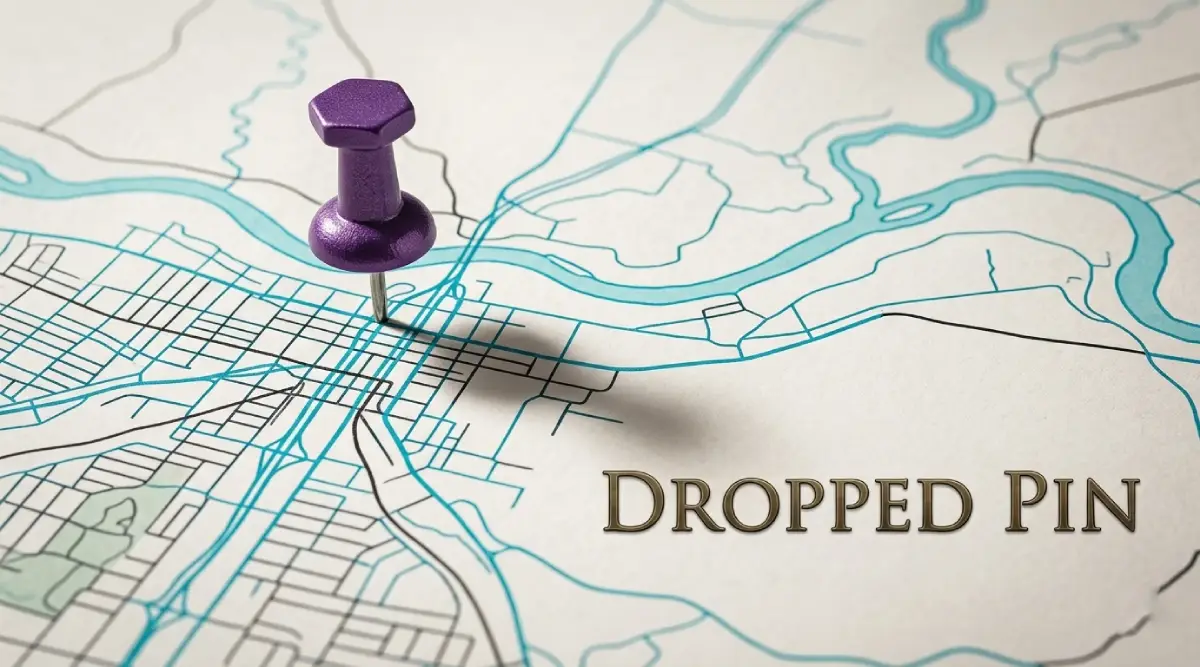
In today’s fast-paced digital world, finding the exact spot where you need to be can sometimes feel like searching for a needle in a haystack. That’s where the concept of a dropped pin comes in—a simple yet powerful feature that allows anyone to mark a precise location on a map. Whether you’re trying to meet friends at a new café, deliver a package, or explore a hidden gem in a city, a dropped pin ensures that everyone arrives at the same spot without confusion. In this comprehensive guide, we’ll explore what a dropped pin is, how it works, its practical applications, and why it has become an essential tool in both daily life and professional settings.
What is a Dropped Pin?
A dropped pin is a digital marker placed on a map to identify a specific location. Unlike an address, which can sometimes be vague or outdated, a dropped pin points to the exact coordinates, allowing for accurate navigation. The feature is commonly available on platforms like Google Maps, Apple Maps, and other GPS-enabled applications.
Think of it as dropping a tiny flag wherever you want—whether it’s your favorite picnic spot, the entrance to a hidden boutique, or the precise location of a delivery point. Once dropped, the pin can be shared with others, ensuring that everyone can find the same location effortlessly.
Will You Check This Article: Wollmatten: Natural Comfort and Timeless Flooring Choice
| Feature | Description |
|---|---|
| Purpose | Marks a precise location on a map |
| Platforms | Google Maps, Apple Maps, Waze, MapQuest |
| Sharing | Via SMS, email, social media, or messaging apps |
| Use Cases | Navigation, event planning, deliveries, social meetups |
How Dropped Pins Work
The technology behind a dropped pin is simple yet effective. Modern map applications use GPS (Global Positioning System) data to track your current location. When you select a spot on the map and drop a pin, the app records the latitude and longitude coordinates of that point. These coordinates are universal, meaning they can be understood and used by any GPS-enabled device worldwide.
After placing a pin, users can:
- Share it – Send the location directly to friends, family, or delivery services.
- Save it – Bookmark the spot for future reference.
- Navigate – Get turn-by-turn directions to the pin from your current location.
This simplicity makes dropped pins extremely versatile, as they eliminate the guesswork often associated with addresses or verbal directions.
Practical Uses of Dropped Pins
The applications of dropped pins extend far beyond casual use. Here’s how people and businesses leverage this feature:
Personal Use
- Meeting Friends: Avoid confusion in crowded areas like parks or festivals.
- Travel & Exploration: Mark tourist spots, hidden cafes, or scenic viewpoints.
- Emergency Situations: Share exact locations quickly with emergency services.
Business Use
- Delivery Services: Couriers can find precise drop-off points, reducing errors and delays.
- Event Planning: Coordinate exact locations for weddings, parties, or corporate events.
- Real Estate: Agents can highlight property locations accurately for clients.
Navigation & Transportation
- Ride-sharing apps often allow drivers and passengers to use dropped pins for pick-up and drop-off points.
- Logistics companies optimize delivery routes using pinned locations, ensuring efficiency.
Case Study: A delivery startup in New York noticed that using dropped pins for addresses with no official street numbers reduced failed deliveries by 30% within three months.
Dropped Pin vs Address: Why Pins are Better
While traditional addresses are useful, they have limitations. A dropped pin overcomes these issues by pinpointing exact coordinates, which is crucial in areas with:
- Ambiguous street numbers
- Large complexes or malls
- Remote locations without clear addresses
| Aspect | Dropped Pin | Traditional Address |
|---|---|---|
| Accuracy | High, exact coordinates | Moderate, sometimes vague |
| Shareability | Instant digital sharing | Requires typing or reading |
| Ease of Use | Tap & send | May need verification |
| Flexibility | Works anywhere globally | Limited to mapped addresses |
How to Drop a Pin
Dropping a pin is usually straightforward, regardless of the device or platform:
On Mobile Devices
- Open your preferred map app (Google Maps, Apple Maps, etc.).
- Press and hold the location where you want the pin.
- A marker appears, showing the name, coordinates, or “Dropped Pin.”
- Use the options to share, save, or get directions.
On Desktop
- Open the map service in your browser.
- Right-click the location you want to mark.
- Select “Drop Pin” or equivalent.
- Copy the link or coordinates to share with others.
Tips for Using Dropped Pins Effectively
- Label Your Pins: Give each pin a name for easier reference.
- Double-Check Coordinates: Especially important for deliveries or emergencies.
- Use Layers or Collections: Many map apps allow you to group pins for trips or events.
- Share via Reliable Channels: Use apps or messaging platforms your recipients frequently use.
Potential Challenges with Dropped Pins
While dropped pins are convenient, users may encounter occasional issues:
- Accuracy in Remote Areas: GPS signals may be weak, causing minor deviations.
- Platform Differences: Not all apps interpret shared pins identically.
- Privacy Concerns: Sharing pins publicly may reveal sensitive location information.
Mitigating these challenges involves verifying pin placement, using trusted apps, and being cautious about sharing personal locations publicly.
Future of Dropped Pins
As navigation technology evolves, dropped pins are becoming smarter:
- Integration with AR (Augmented Reality): Imagine dropping a pin and seeing it through your AR headset in real-time.
- Smart Notifications: Receive alerts when friends or deliveries arrive at pinned locations.
- Enhanced Business Tools: Companies can track deliveries, optimize routes, and plan events more efficiently.
Dropped pins are likely to become an even more critical tool for personal navigation, logistics, and business operations in the coming years.
Conclusion
Dropped pins have transformed the way we navigate, meet, and share locations. They provide unmatched accuracy, simplify complex directions, and offer convenience for both personal and professional use. From coordinating events to ensuring precise deliveries, the dropped pin is a simple tool with immense practical value. By understanding how to use dropped pins effectively, anyone can save time, reduce confusion, and enjoy seamless navigation experiences.
Read More: Dollartimes.co.uk

Introduction
In the ever-evolving world of digital entertainment, Demonscans has become a widely recognized name among manga enthusiasts seeking quick and convenient access to their favorite stories. Whether you’re a casual reader or a dedicated fan, the platform has likely crossed your path at some point. But what exactly is Demonscans, and why has it gained so much attention in online communities?
This article dives deep into Demonscans—its origins, purpose, features, controversies, and its broader impact on the manga-reading culture. By the end, you’ll have a clear understanding of how it works, why people use it, and what alternatives exist for a more sustainable reading experience.
What Is Demonscans?
Demonscans is an online platform commonly associated with fan-translated manga content. It belongs to a category of websites often referred to as “scanlation” platforms, where manga is scanned, translated, and uploaded by fans rather than official publishers.
Unlike traditional publishing routes, these platforms provide early access to manga chapters, often before official translations are released. This speed and accessibility have made Demonscans particularly appealing to readers who want to stay up-to-date with ongoing series.
Will You Check This Article: Eslato Explained: Meaning, Uses, and Growing Influence
Platform Overview
| Feature | Description |
|---|---|
| Content Type | Manga (fan-translated) |
| Accessibility | Free, online reading |
| Update Frequency | Often fast, sometimes daily |
| Target Audience | Manga fans worldwide |
| Language Availability | Primarily English |
Demonscans is not a single fixed entity but rather part of a broader ecosystem of similar platforms that appear, disappear, and rebrand over time.
The Rise of Scanlation Culture
To understand Demonscans, it’s important to explore the concept of scanlation. The term combines “scan” and “translation,” reflecting the process of digitizing manga pages and translating them into different languages.
Why Scanlation Became Popular
Scanlation emerged as a response to a gap in accessibility. Many manga titles were either unavailable outside Japan or delayed in official release schedules. Fans took matters into their own hands, forming communities that worked collaboratively to bring these stories to a global audience.
Demonscans is one such platform that grew from this grassroots movement. It gained traction because it catered to readers who were tired of waiting for official releases or couldn’t access them at all.
A Community-Driven Effort
Behind platforms like Demonscans are teams of volunteers—translators, editors, and proofreaders. These individuals often work without pay, driven by passion for manga and a desire to share it with others.
This community aspect creates a sense of belonging among users, making Demonscans more than just a reading site—it becomes a shared space for fans.
Features That Attract Readers to Demonscans
Demonscans stands out due to several features that appeal to its audience. While similar platforms exist, its usability and content variety often make it a preferred choice.
Fast Updates and Early Releases
One of the biggest attractions is speed. Chapters are often uploaded shortly after their original release in Japan. For fans who want to avoid spoilers or stay current, this is a major advantage.
Wide Manga Library
Demonscans typically hosts a large collection of titles, ranging from popular mainstream series to lesser-known gems. This variety allows readers to explore genres they might not find elsewhere.
User-Friendly Interface
The platform is designed for easy navigation. Readers can quickly search for titles, bookmark favorites, and resume reading without hassle.
Free Access
Perhaps the most obvious benefit is that it’s free. Users don’t need subscriptions or payments, making it accessible to anyone with an internet connection.
Legal and Ethical Considerations
While Demonscans offers convenience, it also raises important legal and ethical questions. Understanding these concerns is crucial for making informed decisions as a reader.
Copyright Issues
Manga is protected by copyright laws, and unauthorized distribution—such as scanlation—violates these rights. Platforms like Demonscans operate in a gray area, often without permission from creators or publishers.
Impact on Creators
When readers rely on unofficial sources, creators may lose potential revenue. This can affect the sustainability of the industry, especially for smaller artists who depend on sales.
Reader Responsibility
Readers play a role in shaping the industry. Supporting official releases when possible helps ensure that creators are fairly compensated for their work.
Comparing Demonscans with Official Platforms
To better understand its place in the ecosystem, it’s helpful to compare Demonscans with official manga platforms.
| Aspect | Demonscans | Official Platforms |
|---|---|---|
| Cost | Free | Paid or subscription-based |
| Release Speed | Very fast | Slower but consistent |
| Translation Quality | Varies | Professionally edited |
| Legality | Questionable | Fully legal |
| Creator Support | None | Direct support |
This comparison highlights the trade-offs readers face when choosing where to read manga.
Why Readers Still Choose Demonscans
Despite the drawbacks, Demonscans continues to attract a large audience. The reasons go beyond just free access.
Instant Gratification
In a fast-paced digital world, waiting weeks or months for official translations can feel frustrating. Demonscans satisfies the desire for immediate content.
Access to Rare Titles
Some manga titles are never officially translated or released globally. Demonscans fills this gap, giving readers access to otherwise unavailable content.
Community Engagement
Users often share recommendations, discuss chapters, and connect over shared interests. This sense of community adds value beyond the content itself.
Risks and Challenges of Using Demonscans
While it offers convenience, using Demonscans is not without risks. Being aware of these can help users make safer choices.
Security Concerns
Some unofficial sites may host intrusive ads or malicious links. Users should exercise caution when browsing.
Inconsistent Quality
Since translations are done by fans, quality can vary. Errors in translation or formatting may affect the reading experience.
Platform Instability
These sites can be taken down or blocked at any time, leading to interruptions in access.
Alternatives to Demonscans
For those seeking a more reliable or ethical approach, several alternatives are available.
Official Manga Apps and Websites
Platforms like subscription-based manga services provide high-quality translations and support creators directly. They often include features like offline reading and curated recommendations.
Digital Bookstores
Purchasing manga volumes digitally ensures that creators receive compensation while offering a polished reading experience.
Library Access
Some libraries provide digital manga collections, allowing readers to enjoy content legally without additional cost.
The Future of Platforms Like Demonscans
The future of Demonscans and similar platforms is uncertain. As the manga industry continues to expand globally, official distribution channels are becoming more accessible.
Changing Reader Habits
With more affordable and convenient official options, some readers are shifting away from unofficial platforms.
Industry Adaptation
Publishers are recognizing the demand for faster releases and broader availability, which could reduce the reliance on scanlation sites.
Ongoing Debate
The discussion around platforms like Demonscans is ongoing. While some view them as harmful, others see them as a stepping stone that helped globalize manga culture.
Conclusion
Demonscans represents a complex intersection of accessibility, community, and controversy in the digital manga world. It has played a significant role in making manga available to a global audience, especially during times when official options were limited.
However, its use comes with legal and ethical considerations that readers should not ignore. Supporting creators through official channels, when possible, helps sustain the industry and ensures the continued production of the stories we love.
Ultimately, the choice lies with the reader. By understanding both the benefits and drawbacks of Demonscans, you can make informed decisions that align with your values and reading preferences.
Read More: Parkmagazineny.co.uk

Bollyflix: Complete Guide to Movies, Shows & Access

Brimo: Complete Guide to Indonesia’s Smart Banking App

Chicken Road: Meaning, Uses, and Modern Relevance

Is Elizabeth Rizzini Still Married? The Truth About Her Relationship Status

Mark McCann Net Worth: The Real Story Behind His Wealth, Business Empire & Success

Andrew Frankel: The Private Billionaire Behind the Spotlight
-

 Tech3 days ago
Eslato Explained: Meaning, Uses, and Growing Influence
-

 Tech3 days ago
fkstrcghtc: A Modern Concept Shaping Clarity and Focus
-

 Blog3 days ago
Demonscans: Exploring the World of Online Manga Access
-

 Health & Fitness3 days ago
Truvirility: Meaning, Uses, and Real-World Relevance
-

 Tech3 days ago
Bastinews.xyz: A Modern Hub for Digital News & Trends
-

 Celebrity4 days ago
Finnorth: A Modern Concept Shaping Digital Futures
-

 Tech4 days ago
Emcons Explained: Meaning, Uses, and Real-World Impact
-

 Blog4 days ago
Fetid Key OSRS: Complete Guide to Uses, Farming & Tips