
Health & Fitness
fiebrigen: Meaning, Usage, and Emotional Context


Some words feel charged the moment you encounter them, as if they carry heat, tension, or movement inside them. fiebrigen is one of those words. It sounds restless, intense, and slightly unsettled, even before you try to define it. People often come across fiebrigen in reflective writing, online conversations, or creative contexts where emotions feel heightened. To understand fiebrigen, you need to look beyond definition and into the experience it tries to capture.
The Core Meaning Behind fiebrigen
At its core, fiebrigen is often associated with a state of emotional or mental intensity. It suggests something fever-like, not necessarily illness, but a sense of inner agitation or heightened feeling. People use it to describe moments when thoughts race, emotions surge, or clarity feels just out of reach.
What makes fiebrigen distinctive is that it does not describe calm reflection. Instead, it points to movement and pressure inside the mind or heart. That movement can be creative, anxious, passionate, or overwhelming, depending on context. The word adapts to the emotional temperature of the moment.
In everyday use, fiebrigen tends to appear when someone feels consumed by something. It becomes a shorthand for inner intensity that words like stressed or excited cannot fully express.
Will You Check This Article: Jeusol3 Explained: Meaning, Usage, and Online Presence
Possible Linguistic Roots and Inspiration
fiebrigen appears influenced by language patterns associated with fever or heightened states. The sound itself suggests warmth and urgency, which aligns with how people emotionally interpret it. Even without formal roots, the structure of the word guides its meaning intuitively.
Many modern terms emerge this way, shaped by sound symbolism rather than strict etymology. People create words that feel right before they fully know what they mean. fiebrigen likely grew from that instinct, combining familiar phonetic cues into something new.
As the word spreads, shared usage refines its meaning. Over time, fiebrigen becomes less about its sound and more about the emotional state people associate with it through repeated experience.
Emotional Intensity and Inner States
Emotionally, fiebrigen often reflects restlessness. It captures moments when the mind cannot settle, when feelings feel urgent but undefined. This makes it especially relevant in discussions about creative tension, anxiety, or emotional overload.
Unlike words that label specific emotions, fiebrigen allows complexity. Someone can feel driven and unsettled at the same time. The word holds both without forcing clarity, which is why it resonates with people navigating complicated inner states.
This emotional flexibility is important. It allows fiebrigen to describe not just distress, but also moments of inspiration or transformation where intensity precedes clarity.
How fiebrigen Is Used in Modern Expression
In modern language, fiebrigen appears most often in informal or creative spaces. Writers use it to set mood, while individuals use it to describe how they feel without unpacking every detail. It works well in short reflections, captions, or expressive writing.
The word rarely appears in technical or formal contexts. Its strength lies in emotional resonance, not precision. Readers tend to feel its meaning rather than analyze it, which makes it effective in personal expression.
Usage patterns show that fiebrigen often stands near descriptions of thought, emotion, or atmosphere. It colors the sentence rather than driving it, adding depth without demanding focus.
Why fiebrigen Resonates Today
Modern life often feels intense, fast, and mentally crowded. Many people experience emotional pressure without clear labels for it. fiebrigen resonates because it acknowledges that state without judgment or diagnosis.
The word also fits well with conversations about mental and emotional awareness. It validates the experience of feeling overwhelmed or driven without framing it as weakness. That validation makes the term feel supportive rather than alarming.
Its resonance comes from honesty. fiebrigen does not promise calm or resolution. It simply names the heat of the moment, which many people find relieving.
Common Misreadings of fiebrigen
Some interpret fiebrigen strictly as something negative, linking it only to anxiety or distress. While it can describe discomfort, it also applies to creative or passionate intensity. Reducing it to negativity limits its expressive range.
Another misreading treats it as dramatic exaggeration. When used sincerely, fiebrigen reflects real experience, not performance. Overuse or careless use can make it feel theatrical, but that is a matter of context, not the word itself.
Understanding these misinterpretations helps keep the word meaningful. Its value lies in nuance, not extremes.
Using fiebrigen With Authenticity
Authentic use of fiebrigen starts with self-awareness. It works best when you genuinely feel internal intensity that resists simple explanation. In those moments, the word often fits naturally without effort.
Simplicity matters. fiebrigen does not need heavy explanation or embellishment. Letting it sit quietly in a sentence allows readers to connect through shared emotional understanding.
Experience shows that readers respond to honesty. When fiebrigen reflects a real state of mind, it creates empathy rather than confusion.
Conclusion
fiebrigen matters because it gives language to emotional heat and mental movement. It captures moments when feelings are alive, unsettled, and unresolved. In doing so, it reflects a very human experience that many struggle to articulate.
Rather than offering answers, fiebrigen names the state itself. That naming can be comforting. It reminds us that intensity is part of growth, creativity, and self-awareness. In a world searching for clarity, fiebrigen allows us to acknowledge the fire before it cools.
Read More: Pointmagazine.co.uk

Introduction
The term Wat Wax might sound unusual at first, but it represents an interesting concept connected to wax materials and their interaction with water, temperature, and practical everyday applications. In many contexts, Wat Wax refers to wax products or wax-related processes that involve water interaction, water-based formulations, or temperature-driven wax behavior. Understanding Wat Wax can help people in industries like manufacturing, crafts, skincare, and even energy production.
Wax itself is a versatile substance that softens when heated and hardens when cooled, making it useful for countless products—from candles and polishes to cosmetics and protective coatings. However, when wax is studied in scientific or industrial contexts, especially in energy and petroleum engineering, the term Wax Appearance Temperature (WAT) becomes important. It describes the point at which wax crystals begin to form as a liquid cools.
This article explores the full meaning of Wat Wax, its origins, how it works, where it is used, and why it matters in both everyday life and industrial processes. By the end, readers will understand the science behind wax behavior, practical applications of water-related wax products, and the growing importance of wax-based materials across many fields.
Overview of Wat Wax
| Aspect | Details |
|---|---|
| Term | Wat Wax |
| Core Idea | Wax interacting with water or temperature-related wax behavior |
| Related Concept | Wax Appearance Temperature (WAT) |
| Common Uses | Crafts, cosmetics, wood finishing, candles, and industrial processes |
| Key Property | Wax transitions between solid and soft states depending on temperature |
| Industries Involved | Manufacturing, cosmetics, energy, and DIY crafts |
This table highlights the multi-dimensional nature of Wat Wax, which can refer to both practical wax products and scientific processes involving wax formation.
Will You Check This Article: Attrities: Meaning, Causes, History, and Human Impact
Understanding the Basics of Wax
Before diving deeper into Wat Wax, it is essential to understand what wax actually is and why it behaves the way it does.
Wax is generally defined as a solid or semi-solid substance made of organic compounds that become soft when heated and solid again when cooled. Because of this property, wax is widely used as a protective coating, sealing agent, and shaping material. Many waxes are derived from natural sources such as beeswax, plant waxes, and mineral waxes.
One key feature of wax is its ability to repel water. This property makes wax extremely useful for waterproofing surfaces, protecting materials, and preserving objects. From furniture polish to candle-making, wax creates a thin protective layer that shields surfaces from moisture and environmental damage.
Because wax is both durable and flexible, it can adapt to many uses. This adaptability is why variations like Wat Wax exist, combining wax properties with water-related functionality.
The Science Behind Wax Behavior
Wax behaves differently depending on temperature and environmental conditions. As temperature decreases, wax molecules begin to solidify and form crystals. This process is particularly important in industrial systems where wax can influence how fluids behave.
Wax Appearance Temperature and Its Role
One of the most important scientific concepts connected to Wat Wax is the Wax Appearance Temperature, often abbreviated as WAT. This is the temperature at which wax crystals begin to form in a liquid when it cools.
When the temperature drops below this point, the liquid begins to show small wax crystals that can change the fluid’s flow properties. In industries such as petroleum transport, these crystals may accumulate and cause operational challenges.
Why Temperature Matters
Temperature plays the most critical role in wax formation. When liquids containing wax molecules cool, the molecules lose energy and begin bonding together. These bonds eventually create solid crystals that can settle or accumulate.
Scientists study this process carefully because wax formation can affect machinery, pipelines, and storage systems. By understanding when wax crystals appear, engineers can design systems that prevent blockages and maintain efficiency.
Types of Wat Wax and Related Materials
The concept of Wat Wax appears in several forms depending on the context in which it is used. While not always a formal scientific term, it often refers to wax materials connected with water or moisture-based applications.
Water-Based Wax Products
Water-based wax products combine wax with water-friendly ingredients to create easy-to-apply coatings. These products are often used for wood finishing, leather care, and craft projects. Because they contain water-soluble elements, they spread smoothly and dry evenly.
Such wax formulations are popular among hobbyists and professionals because they offer a clean application process and minimal residue. Many people use them for furniture polishing or decorative art pieces.
Protective Surface Waxes
Another category of Wat Wax involves wax coatings designed to protect surfaces from moisture damage. When applied to wood, leather, or fabric, wax forms a thin barrier that prevents water penetration.
This protective function makes wax a preferred solution for outdoor equipment, furniture finishes, and waterproof textiles.
Craft and Artistic Wax
Artists frequently use wax in creative projects. Wax can seal paintings, add texture to sculptures, or create glossy finishes on decorative items. When mixed with water-compatible materials, the wax becomes easier to apply and manipulate.
Craft enthusiasts appreciate these wax blends because they enhance both durability and visual appeal.
Industrial Importance of Wat Wax
While wax products are common in households, the industrial side of Wat Wax is equally significant. In large-scale systems such as oil pipelines and chemical processes, wax behavior can strongly influence performance.
Wax Formation in Energy Systems
Certain types of crude oil contain natural wax compounds made of long hydrocarbon chains. When the temperature drops during transportation or storage, these compounds can crystallize and form solid deposits.
These deposits may stick to pipeline walls, restricting the flow of liquids. Engineers must therefore monitor wax formation carefully to prevent operational issues.
Managing Wax Deposition
Industries use several strategies to control wax formation:
- Maintaining higher temperatures during transport
- Using chemical additives that prevent crystal buildup
By predicting wax formation temperatures, operators can design systems that reduce maintenance costs and improve efficiency.
Everyday Applications of Wat Wax
Beyond industrial environments, Wat Wax plays a role in everyday products that people use daily. Many of these applications take advantage of wax’s water-resistant and protective qualities.
Wood Finishing and Furniture Care
Wax finishes are commonly applied to wood furniture to enhance appearance and protect surfaces. The wax penetrates the wood grain, creating a smooth texture while adding a subtle shine.
Furniture makers often prefer wax because it highlights the natural beauty of wood without forming a thick artificial layer.
Candle Making
Candles are one of the most familiar wax-based products. Different wax types—such as paraffin, soy, or beeswax—can be blended to achieve specific melting points and textures.
Water-related wax mixtures may be used in specialty candles designed for decorative or ritual uses.
Skin and Personal Care
Many skincare products contain wax because it forms a protective barrier on the skin. Lip balms, hand creams, and ointments frequently use wax to retain moisture and shield skin from environmental dryness.
Wax-based cosmetics also help maintain product stability while improving texture.
Properties That Make Wat Wax Useful
Wax materials are valued for several unique characteristics that make them versatile in both household and industrial settings.
| Property | Benefit |
|---|---|
| Water Resistance | Protects surfaces from moisture |
| Temperature Sensitivity | Allows molding and shaping |
| Smooth Texture | Ideal for polishing and finishing |
| Protective Barrier | Preserves materials and skin |
| Versatility | Works across crafts, cosmetics, and manufacturing |
These properties explain why wax-based materials remain essential in so many products and processes.
Environmental Considerations
Modern wax products are increasingly designed with sustainability in mind. Natural waxes derived from plants or bees are biodegradable and renewable. These materials reduce environmental impact compared with synthetic alternatives.
In addition, many manufacturers now develop eco-friendly wax blends that provide the same protective benefits while minimizing chemical residues.
Consumers are becoming more conscious of the materials used in everyday products. As a result, environmentally responsible wax formulations are gaining popularity in crafts, cosmetics, and household goods.
Future Trends in Wat Wax Applications
The future of Wat Wax and related wax technologies looks promising. Scientists and manufacturers are exploring innovative ways to enhance wax performance while expanding its applications.
One emerging trend involves advanced protective coatings made from wax blends. These coatings could provide improved durability for electronics, packaging materials, and transportation equipment.
Another area of interest is biodegradable wax packaging. By replacing plastic coatings with wax-based alternatives, companies can reduce waste and improve sustainability.
In the cosmetic industry, researchers are also developing plant-based wax ingredients that offer better skin compatibility and environmental benefits.
Conclusion
Wat Wax represents a fascinating intersection of natural materials, chemistry, and practical innovation. Whether viewed as water-compatible wax products or as part of the scientific concept of wax formation temperature, the idea highlights how versatile wax truly is.
From protecting furniture and skin to influencing industrial processes, wax materials serve an essential role in modern life. Their ability to resist moisture, change form with temperature, and create protective layers makes them valuable across many industries.
As technology advances and sustainability becomes a greater priority, wax-based materials will likely continue evolving. New eco-friendly formulations and innovative applications will ensure that wax remains an important material for both everyday products and specialized industrial systems.
Understanding Wat Wax not only reveals the science behind a simple substance but also shows how traditional materials can adapt to meet modern needs.
Read More: Lumerink.com

Introduction
The word Attrities often appears in discussions about violence, injustice, and human suffering. Although the term may sometimes be confused with similar words, Attrities broadly refers to acts of extreme cruelty, severe harm, or morally shocking behavior that deeply affects individuals, communities, or entire societies. These acts leave lasting scars not only on victims but also on history, culture, and collective memory.
Understanding Attrities is important because it helps people recognize patterns of abuse, learn from past tragedies, and build systems that prevent such events from happening again. From historical conflicts to modern humanitarian crises, societies have repeatedly confronted situations where basic human values were ignored or violated.
This article explores the meaning of Attrities, their causes, historical examples, psychological and social impacts, and the global efforts to prevent them. By examining the topic from multiple perspectives, readers can gain a deeper understanding of why these events occur and how societies can respond more responsibly in the future.
Understanding the Meaning of Attrities
The concept of Attrities refers to actions that involve extreme cruelty, violence, or deliberate harm toward people, communities, or living beings. These actions are generally considered morally unacceptable because they violate fundamental principles of dignity, safety, and humanity.
Attrities are not limited to physical harm alone. They may also include psychological abuse, cultural destruction, forced displacement, or systematic oppression. In many cases, such acts occur during conflicts, political upheaval, or social breakdowns when laws and moral safeguards fail.
What makes Attrities particularly disturbing is their scale and intent. Unlike isolated incidents of violence, these acts often involve organized systems, widespread participation, or deliberate targeting of vulnerable groups. This collective nature amplifies their impact and creates long-term consequences for society.
Understanding this concept helps communities recognize early warning signs of injustice and encourages the development of stronger protections for human dignity.
Will You Check This Article: Look2Movie: A Complete Guide to the Popular Movie Platform
Key Characteristics of Attrities
Attrities share several defining characteristics that differentiate them from ordinary acts of violence or wrongdoing. These features help researchers and policymakers identify patterns and address the root causes.
First, Attrities often involve deliberate harm. The actions are not accidental but planned or encouraged by individuals or institutions that justify their behavior through ideology, fear, or power.
Second, they usually target specific groups or communities. These groups may be chosen because of their identity, beliefs, ethnicity, or political position. The targeting creates a climate of fear and deepens social divisions.
Third, Attrities frequently occur when systems of accountability fail. When laws are weak, leadership is corrupt, or social norms collapse, harmful behavior can escalate without consequences.
Understanding these patterns provides insight into how societies can detect and prevent large-scale harm before it spreads.
Common Forms of Attrities
Attrities can appear in many different forms depending on social, political, or historical circumstances. Although each case is unique, certain patterns appear repeatedly across different societies and periods.
One form involves violent acts during wars or armed conflicts. Civilians may become victims when military groups attack communities, destroy homes, or use fear as a strategy.
Another form includes systematic oppression, where people are denied rights, freedom, or opportunities because of their identity. These conditions may develop slowly over time and become normalized if they go unchallenged.
Attrities can also involve cultural destruction, such as the elimination of traditions, languages, or historical sites. When a culture is deliberately erased, it weakens a community’s identity and heritage.
The diversity of these forms shows that Attrities are not limited to a single type of harm but represent a wide range of violations against humanity.
Historical Context of Attrities
Throughout history, societies have witnessed moments where cruelty and violence reached extreme levels. These events are often remembered as painful lessons that highlight the dangers of unchecked power and intolerance.
Ancient civilizations recorded stories of destroyed cities, enslaved populations, and brutal punishments. While historical accounts vary in detail, they show that humanity has long struggled with the challenge of preventing severe harm.
In more recent centuries, industrialization, political ideologies, and technological advancements increased the scale at which Attrities could occur. Large populations became vulnerable when governments or organizations used power without ethical restraint.
Studying historical examples helps scholars understand how such events developed and what warning signs appeared before they escalated. These lessons remain valuable for preventing similar tragedies today.
Major Causes Behind Attrities
Understanding why Attrities happen is essential for preventing them. Although circumstances vary, several underlying causes appear frequently in different regions and periods.
Power and Political Control
One common cause involves the pursuit of power. Leaders or groups may attempt to maintain control by suppressing opposition, silencing critics, or intimidating populations. When authority becomes absolute and unchallenged, harmful actions may escalate rapidly.
Fear and Propaganda
Fear is another powerful factor. Communities may be persuaded that another group is dangerous or inferior. When fear spreads through propaganda or misinformation, people may support harmful policies or actions they would normally reject.
Social Division and Discrimination
Deep social divisions can create environments where empathy disappears. When individuals view others as enemies rather than fellow human beings, it becomes easier to justify harmful behavior.
Breakdown of Institutions
Attrities also become more likely when institutions fail. Courts, governments, and community structures normally provide protection and accountability. When these systems collapse or become corrupted, violence can spread unchecked.
The combination of these factors often leads to the conditions where severe harm becomes possible.
Social and Psychological Impact of Attrities
The consequences of Attrities extend far beyond the immediate victims. Entire societies can experience long-term emotional, economic, and cultural damage.
For individuals, trauma is one of the most profound effects. Survivors may struggle with anxiety, grief, and memories that last for years or even generations. Families often lose loved ones, homes, and a sense of safety.
Communities also suffer from broken trust. When neighbors or authorities participate in harmful acts, rebuilding relationships becomes extremely difficult. Social divisions may continue long after the original events end.
Economically, societies affected by Attrities may face destroyed infrastructure, displaced populations, and reduced opportunities for development. These setbacks can slow progress for decades.
Understanding these impacts reminds the world why preventing such events must remain a global priority.
Global Responses and Prevention Efforts
Over time, international communities have developed systems to address and prevent Attrities. These efforts aim to protect human rights and ensure accountability for severe wrongdoing.
One approach involves international cooperation. Countries and organizations often work together to monitor conflicts, provide humanitarian aid, and support peace-building initiatives.
Education also plays a major role. By teaching history, ethics, and cultural understanding, societies can help future generations recognize the dangers of intolerance and violence.
Legal systems and investigative bodies attempt to ensure accountability. When individuals responsible for severe harm face consequences, it sends a message that such actions will not be tolerated.
Although these measures cannot erase past tragedies, they contribute to building a more responsible and compassionate global community.
Examples of Attrities in Historical Perspective
To understand the scale and diversity of Attrities, it helps to examine historical contexts where severe harm occurred. While each event differs, common patterns often emerge.
In some cases, political regimes targeted groups they considered threats to their authority. Entire communities were displaced or subjected to harsh treatment in order to maintain control.
Other examples involve violent conflicts where civilians became unintended or deliberate victims. The chaos of war often created conditions where moral boundaries collapsed and severe harm spread.
These examples serve as reminders of how quickly human values can deteriorate when fear, hatred, or unchecked power dominate decision-making.
Comparative Overview of Attrities Causes
The following table highlights several major factors associated with Attrities and how they influence societal conditions.
| Factor | Description | Potential Impact |
|---|---|---|
| Political Power | Leaders seeking control without accountability | Suppression of opposition and civil rights |
| Fear and Propaganda | Spreading misinformation about groups | Increased hostility and discrimination |
| Social Division | Cultural, ethnic, or ideological conflicts | Loss of empathy and rising violence |
| Institutional Failure | Weak or corrupt systems of law and governance | Lack of protection for vulnerable populations |
| Economic Instability | Poverty and resource competition | Heightened tensions and unrest |
This overview demonstrates that Attrities rarely arise from a single cause. Instead, they emerge when several destabilizing forces interact at the same time.
The Role of Awareness and Education
Education plays a vital role in preventing Attrities. When people understand historical events and ethical principles, they are more likely to challenge harmful ideologies and stand up for justice.
Schools, cultural institutions, and community programs help preserve collective memory. By remembering past tragedies, societies maintain awareness of what can happen when empathy and accountability disappear.
Public discussion also encourages transparency. When difficult topics are openly addressed, it becomes easier to recognize early signs of danger and respond before situations escalate.
Ultimately, awareness empowers individuals to become active participants in protecting human dignity.
Conclusion
Attrities represent some of the darkest moments in human history. They involve extreme cruelty, widespread suffering, and long-lasting consequences that affect individuals, communities, and nations. Understanding the causes, forms, and impacts of these acts is essential for building a more compassionate and responsible world.
By examining historical patterns, societies can identify warning signs and strengthen systems that protect human dignity. Education, accountability, and international cooperation all play important roles in preventing such events from repeating.
The study of Attrities is not merely about remembering past tragedies. It is about learning from them and ensuring that future generations inherit a world guided by empathy, justice, and respect for human life.
Read More: Lumerink.com
Introduction
Language is full of unusual and fascinating words, and Dentiloquent is one of those rare terms that sparks curiosity the moment you hear it. Dentiloquent describes a manner of speaking in which words are pronounced with the teeth nearly closed or clenched, producing a tight, controlled sound. While it may seem like an obscure linguistic term, dentiloquent speech appears in everyday situations—from actors delivering tense dialogue to people speaking through discomfort or emotion.
Understanding Dentiloquent speech opens a window into how humans communicate not just with words but with subtle physical cues. The way we move our mouths, clench our jaws, or control our breath can dramatically change how our speech sounds and how others interpret it. This article explores the meaning, history, practical uses, and cultural significance of Dentiloquent expression. By the end, you’ll understand how this unusual term connects to language, emotion, performance, and even daily conversation.
What Does Dentiloquent Mean?
Dentiloquent refers to speaking with the teeth partially closed, often producing a tight or restrained sound. The word comes from Latin roots: dens meaning “tooth” and loqui meaning “to speak.” Together, they form a term that literally means “speaking through the teeth.”
In practical terms, dentiloquent speech often sounds tense or controlled. Imagine someone whispering angrily while keeping their jaw clenched, or an actor delivering a dramatic line with barely parted lips. That restrained articulation creates a distinctive tone that listeners often associate with suppressed emotion or seriousness.
Dentiloquent speech isn’t necessarily intentional. Sometimes it happens naturally when a person feels cold, nervous, or physically tense. At other times, it’s used deliberately for dramatic or expressive effect.
Will You Check This Article: Erothtos: Meaning, Origins, and Modern Interpretations
The Origins and History of Dentiloquent Speech
The idea behind Dentiloquent speech dates back centuries, even if the word itself is relatively rare. Early scholars of rhetoric and pronunciation often described how physical articulation affected speech sounds. They noticed that the positioning of the lips, tongue, and teeth could change both clarity and emotional tone.
In classical rhetoric, controlled speech was often associated with discipline and authority. Speakers who maintained tight control over their articulation were sometimes seen as serious or composed. Dentiloquent speech fit into this idea because it required careful jaw control.
Later, actors and performers began using dentiloquent techniques to portray specific emotions. Speaking through clenched teeth became a way to show anger, determination, or suppressed frustration without explicitly stating those feelings.
Characteristics of Dentiloquent Speech
Physical Features of Dentiloquent Speaking
Dentiloquent speech is primarily defined by physical articulation. The teeth remain close together, and the jaw moves less than it normally would during relaxed speech. This restricted movement changes how air flows through the mouth and affects pronunciation.
Because the teeth limit movement, certain sounds may become softer or more compressed. Words may sound tighter or slightly muffled compared to normal speech. This effect is subtle but noticeable to attentive listeners.
The physical tension involved in dentiloquent speaking can also affect facial expression. The jaw may appear rigid, and the lips may move less than usual. These visual cues reinforce the emotional tone of the speech.
Emotional Associations
Dentiloquent speech often carries emotional meaning. People frequently associate it with feelings that are being held back or controlled. For example, someone might speak dentiloquently when they are trying to stay calm despite being angry.
This style of speech can also suggest determination. Athletes, for instance, sometimes speak through clenched teeth when pushing through physical strain. The tight articulation reflects effort and focus.
In dramatic settings, dentiloquent delivery often signals tension. A character who speaks this way may be hiding something or struggling with strong emotions.
Dentiloquent in Everyday Life
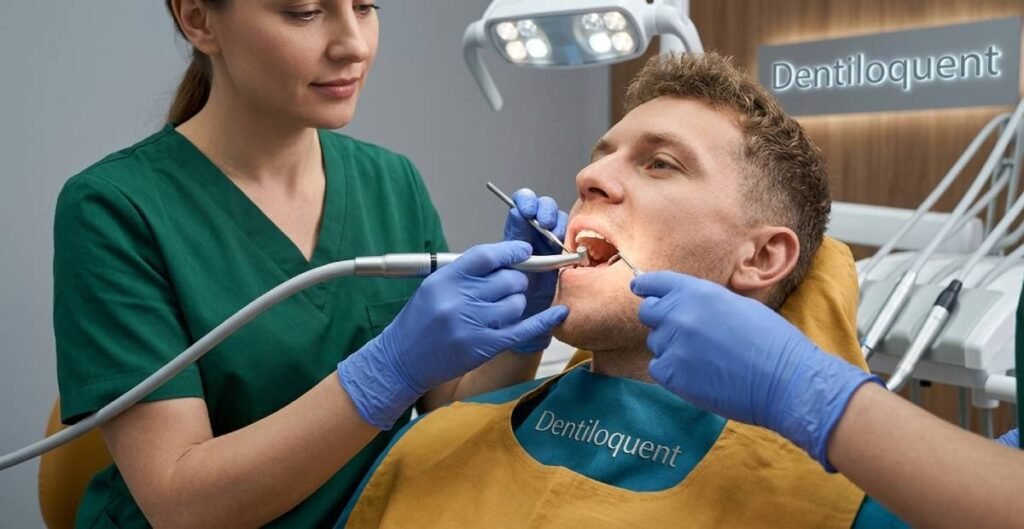
Although the term Dentiloquent sounds academic, the phenomenon itself appears in daily life more often than people realize. Many everyday situations naturally produce dentiloquent speech.
When someone feels cold, their teeth may come together involuntarily, changing how they speak. Similarly, people experiencing stress or anxiety may unconsciously clench their jaws, resulting in a dentiloquent tone.
Dentiloquent speech also appears in quiet conversations. When someone tries to speak softly without fully opening their mouth, their words may take on a dentiloquent quality. This often happens in libraries, meetings, or other quiet environments.
In some cases, dentiloquent speech is simply a habit. Certain individuals naturally speak with limited jaw movement, giving their voices a consistently tight sound.
Dentiloquent in Acting and Performance
Actors often use Dentiloquent speech as a tool for expressing emotion. Because it conveys tension and restraint, it’s particularly effective in dramatic scenes.
A character who is angry but trying to remain calm might deliver lines dentiloquently. The clenched teeth suggest that emotions are being held back, adding depth to the performance.
Similarly, characters experiencing fear or determination may speak dentiloquently. The restricted articulation reflects their internal struggle and heightens the emotional impact of their words.
Voice actors also use dentiloquent techniques to create distinct character voices. By adjusting jaw tension and articulation, they can produce a wide range of vocal styles.
Dentiloquent in Communication and Psychology
Speech patterns often reveal emotional states, and dentiloquent speech is no exception. Psychologists sometimes study how physical tension affects communication, including how jaw clenching influences speech.
When people feel stressed, their muscles naturally tighten. This tension can extend to the jaw, producing dentiloquent speech without conscious effort. Listeners may interpret this as a sign of discomfort or anxiety.
In interpersonal communication, dentiloquent speech can send subtle signals. A person speaking through clenched teeth might appear frustrated or impatient, even if their words are polite. This mismatch between tone and content can influence how messages are received.
Understanding dentiloquent patterns can improve communication by helping people recognize these subtle cues. Awareness allows speakers to adjust their articulation and listeners to interpret tone more accurately.
Common Situations Where Dentiloquent Speech Appears
Dentiloquent speech tends to emerge in specific contexts where physical or emotional tension is present. These situations often involve some degree of restraint or control.
Some examples include:
- Speaking while angry but trying to stay composed
- Talking in cold weather with clenched teeth
- Whispering with minimal mouth movement
- Expressing determination during effort
These scenarios illustrate how Dentiloquent speech connects physical conditions with emotional expression.
Comparison With Other Speech Styles
Different speech styles involve distinct physical and emotional qualities. Dentiloquent speech stands out because of its tight articulation and restrained sound.
| Speech Style | Jaw Movement | Emotional Tone | Clarity |
|---|---|---|---|
| Relaxed Speech | Open and natural | Neutral or friendly | High |
| Dentiloquent Speech | Tight and restricted | Tense or controlled | Moderate |
| Whispered Speech | Slightly open | Quiet or secretive | Variable |
| Exaggerated Speech | Wide movement | Dramatic or expressive | High |
This comparison highlights how dentiloquent articulation creates a unique balance between restraint and expression.
Dentiloquent and Body Language
Speech is closely tied to body language, and dentiloquent expression often accompanies specific physical cues. A clenched jaw, tightened lips, or rigid posture can reinforce the tone of dentiloquent speech.
These nonverbal signals often communicate as much as the words themselves. A person speaking dentiloquently may appear tense even if they claim to feel calm. Observers often pick up on these subtle cues instinctively.
Understanding this connection helps explain why dentiloquent speech can feel emotionally charged. The combination of vocal tone and physical tension creates a powerful impression.
Learning to Recognize Dentiloquent Speech
Recognizing Dentiloquent speech involves paying attention to both sound and appearance. The voice often sounds tight or compressed, and the speaker’s jaw may move less than usual.
Listeners may notice that certain sounds seem shortened or less distinct. The overall effect is a sense of restraint, as though the speaker is holding something back.
Training yourself to notice dentiloquent patterns can improve listening skills. It encourages attention to subtle details that reveal emotional context.
Can Dentiloquent Speech Be Intentional?
Dentiloquent speech can be either intentional or unconscious. Some people deliberately use it to convey emotion or create a specific impression. Actors and performers often practice controlling their articulation for this purpose.
At the same time, many instances of dentiloquent speech happen without awareness. Stress, discomfort, or habit can all lead to clenched teeth and restricted articulation.
Because it can be both deliberate and accidental, dentiloquent speech is a flexible and expressive form of communication.
Dentiloquent in Literature and Dialogue
Writers sometimes describe characters as speaking through clenched teeth to convey tension or anger. This description often implies dentiloquent speech, even if the word itself isn’t used.
Such descriptions help readers imagine the emotional tone of a scene. A character who speaks dentiloquently may seem intense, controlled, or deeply affected by events.
This technique adds realism to dialogue by reflecting how people actually speak under pressure. It connects physical action with emotional meaning in a vivid way.
Conclusion
Dentiloquent speech may be an unfamiliar term, but the phenomenon itself is surprisingly common. By describing speech produced with clenched or nearly closed teeth, Dentiloquent expression highlights the connection between physical articulation and emotional communication.
Throughout daily life, performance, and conversation, dentiloquent patterns reveal tension, control, and subtle emotional cues. Recognizing these patterns can deepen understanding of both spoken language and human behavior.
Whether used intentionally for dramatic effect or occurring naturally in moments of stress, Dentiloquent speech reminds us that communication involves more than words alone. The way we speak—our tone, posture, and articulation—shapes how our messages are understood.
By paying attention to these details, anyone can become a more aware speaker and listener. Dentiloquent speech is just one example of how rich and expressive human communication can be.
Read More: Dollartimes.co.uk

Igembel: Meaning, Uses, Cultural Context, and Growing Interest

MTM Login: Complete Guide to Access, Features, and Account Use

Rejekibet: A Complete Guide to the Popular Online Betting Platform

Is Elizabeth Rizzini Still Married? The Truth About Her Relationship Status

Mark McCann Net Worth: The Real Story Behind His Wealth, Business Empire & Success

Andrew Frankel: The Private Billionaire Behind the Spotlight
-

 Celebrity1 week ago
Katy Davis Suffield: Life, Community Impact, and Story
-

 Entertainment1 week ago
Pelisfulltv: Exploring the Popular Online Movie Platform
-

 Celebrity1 week ago
Chopenawer: Meaning, Origins, and Modern Significance
-

 Celebrity1 week ago
Jeremy Yaffe: Life, Family, and Quiet Hollywood Legacy
-

 Tech1 week ago
Edfvsdrv: Understanding the Meaning, Impact, and Future
-

 Blog1 week ago
Felixing: The Modern Concept of Turning Moments Into Wins
-

 Tech1 week ago
Bestautoxperts.com: A Complete Guide to Smart Auto Care
-

 Business1 week ago
Filreport Explained: Modern Data Reporting for Smarter Decisions